I spent the past two days planting rice seeds with a local farmer family in Hokkaido, Japan. This is my attempt to document and share what I experienced.
A few quick preliminaries:
- Rice farming practices vary a lot between farms. This is because of factors like how much the farmer wants to invest in expensive equipment, how big the farm is, and what specific plants they choose to grow
- Rice is known to be one of the easier crops to grow because of how easy it is to systemize. Certain crops (ie radish) are much harder to automate, since harvesting is more difficult
- Because the family I worked with had a relatively small farm (five greenhouses), we were able to finish the work in two days, with ~5 people working from 7:30 AM - 5 PM.
Finally, before we planted any rice, the farmer family had already finished preparing the soil. From what I understood, this mainly involved finely tilling the land, setting up the greenhouse, and making sure the soil was moist and soft. The following documents the process that follows - the most manual part of the farming year.
The Planting Process
Once the land is prepared, the next step is to prepare the rice seeds! This process is the most heavily automated. The rice is placed in pliable trays arranged in 14 x 32, where a machine drops a layer of soil / fertilizer / 2-3 seeds / soil. Each tray has a line of square holes, relevant later on in the planting process (a machine uses those holes to pick up the tray and transplant grown rice seeds directly into soil). The main point of labor is refilling the dispension machines as they run out.
Once the rice trays start coming out, a human steps in to transport it to a cart. I thought this was pretty easy labor at first, but the tray is positioned just a few inches too low so you have to bend down to pick trays up - which really adds up after days of 4 hour shifts! The family installed a custom limit switch that stops the production line if a tray reaches the end.
Once a cart is sufficiently filled, it gets carted onto metal tracks to the greenhouse for planting. This process is the most chill. To decrease friction and prevent derailing, you usually have to water the tracks with a watering can before you move the cart.
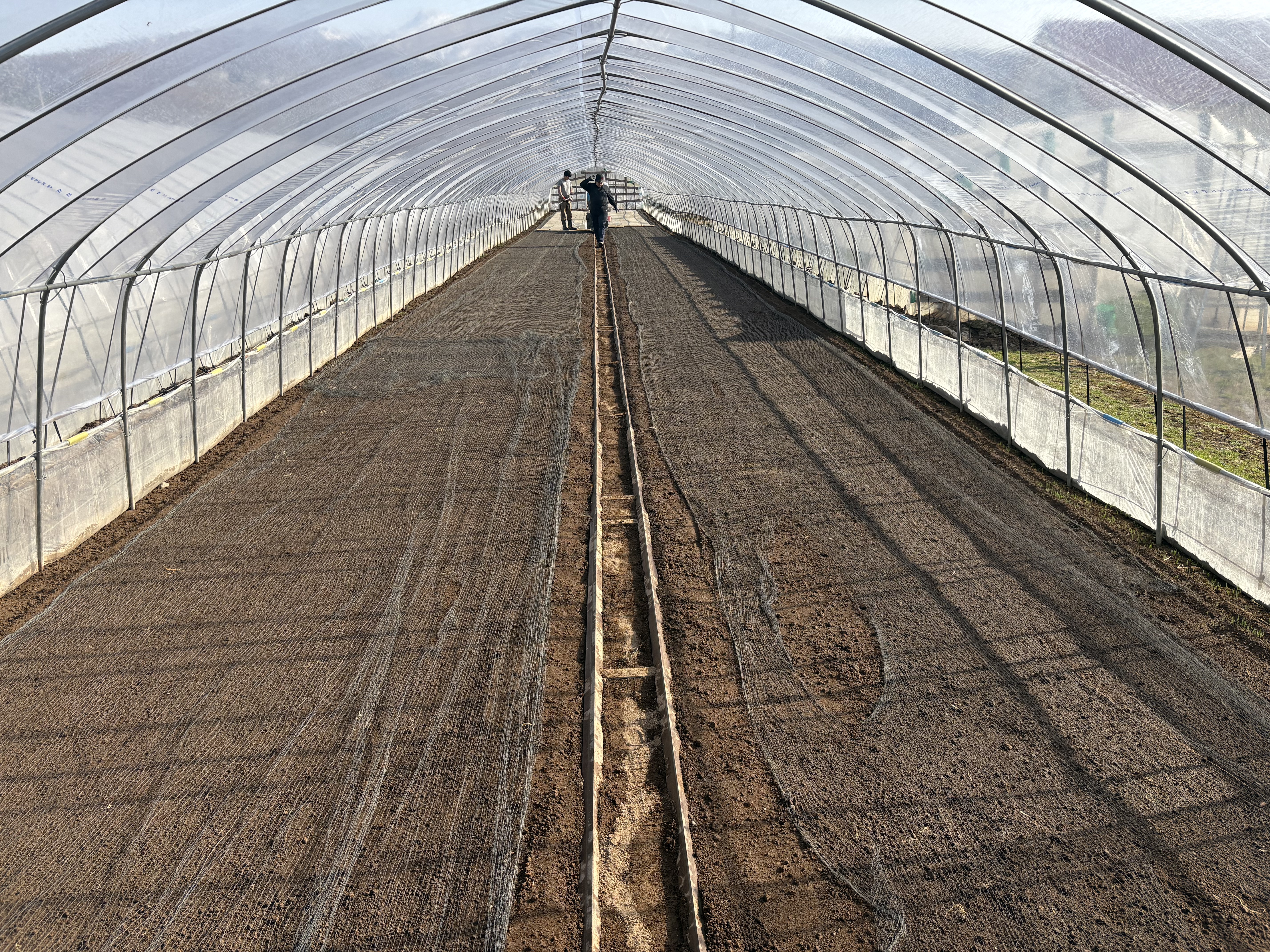
Finally, the trays get planted one by one. Because the soil has been so finely aerated, the only way to move thorugh the greenhouse is by walking in the narrow strip between the metal tracks.
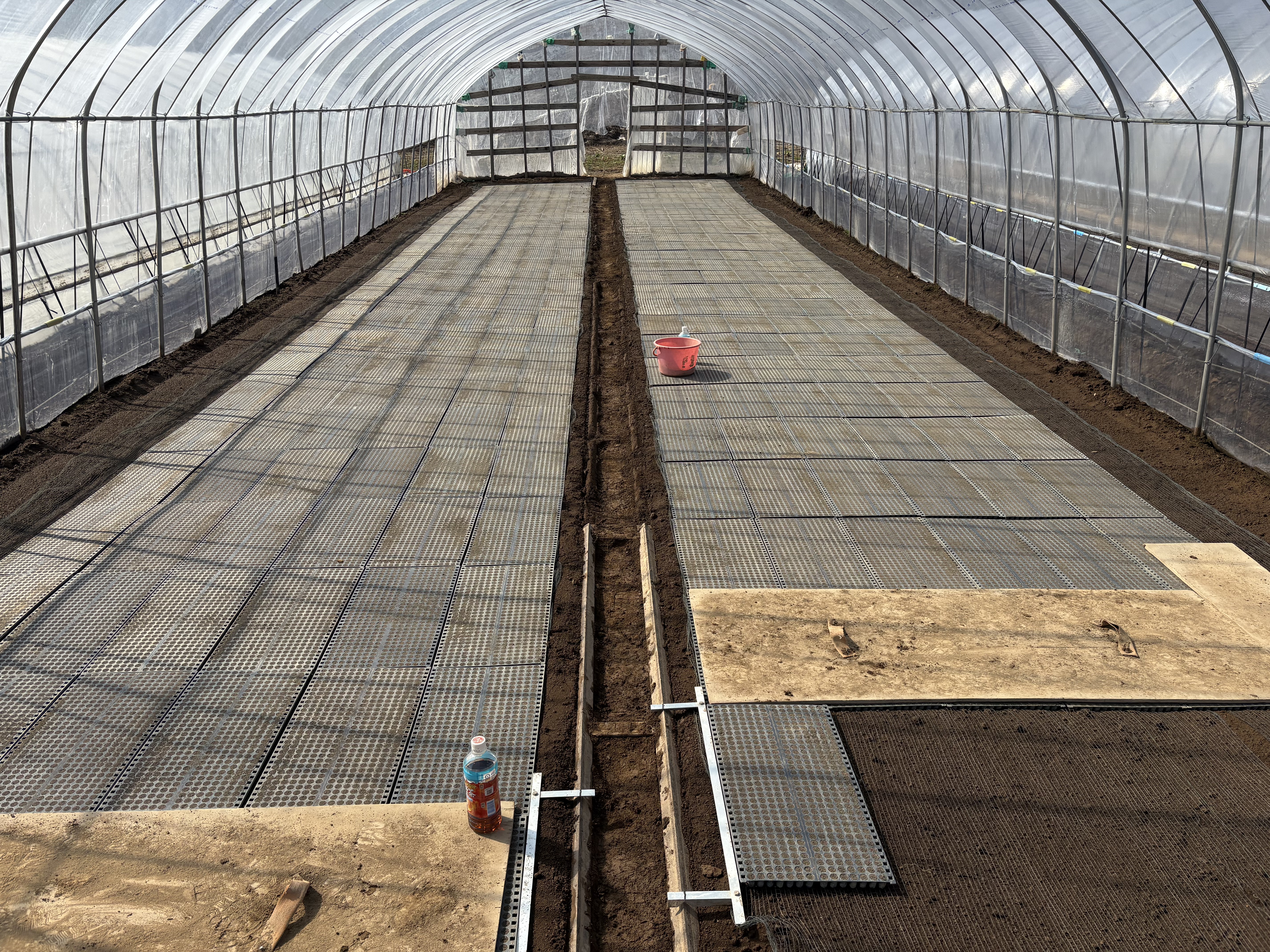
To keep the trays more or less aligned, they align based off distance from the middle track. This was surprisingly very effective.
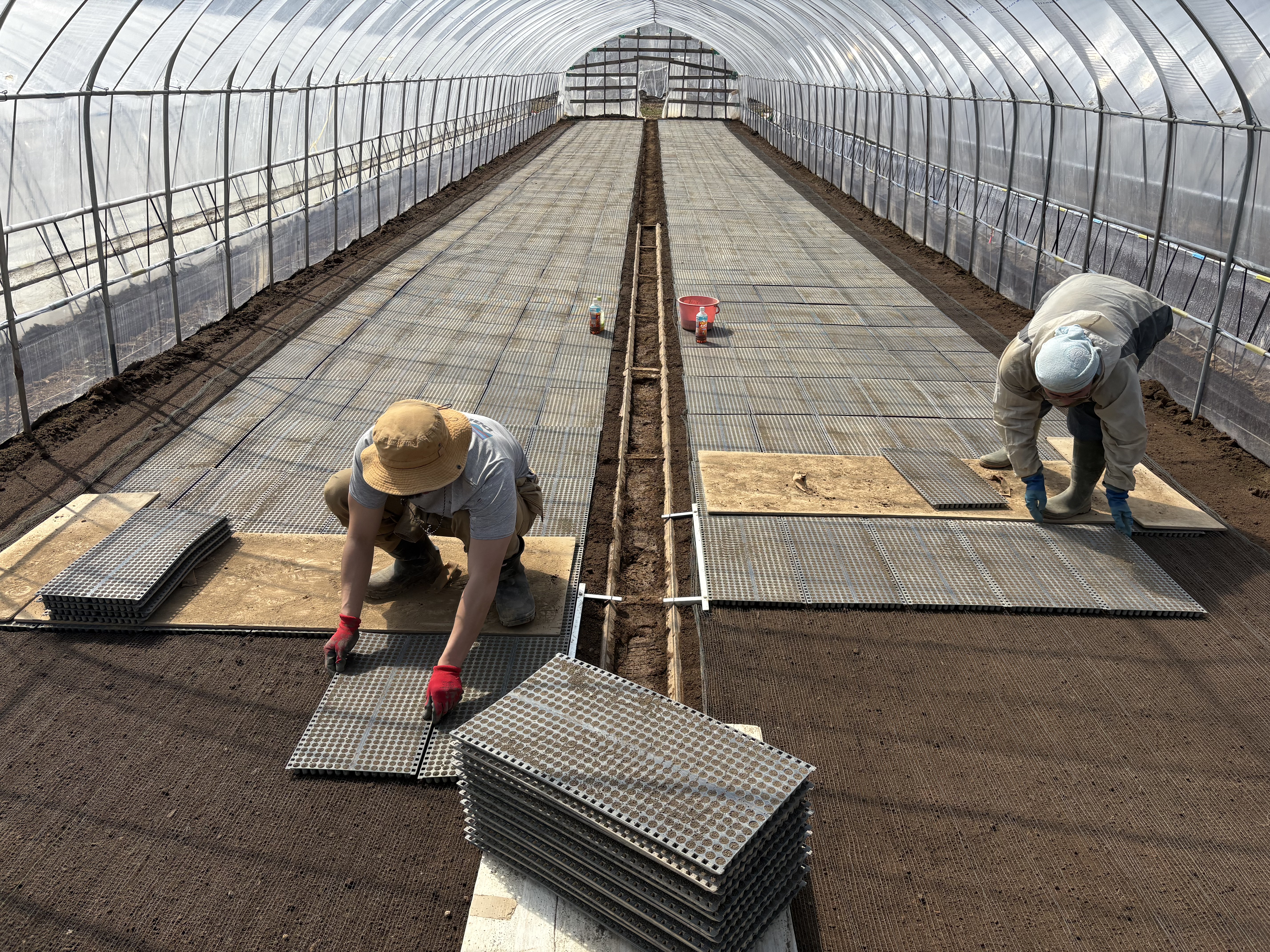
Throughout the planting process, it feels a bit like a floor is lava situation. Aside from the middle track, you can only step on the wooden boards, which you also use to uniformly push trays into the ground.
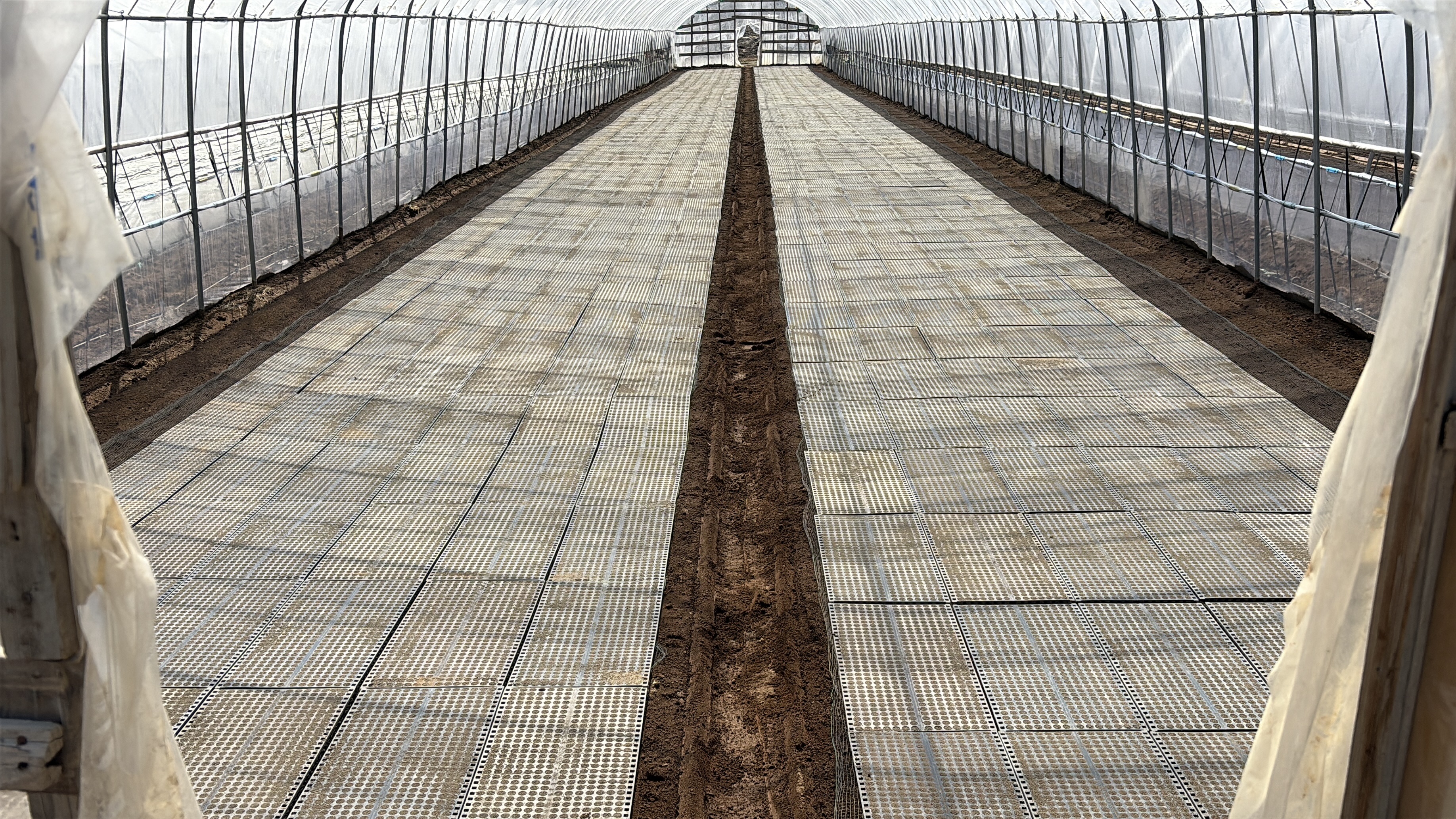
Slowly and very gradually, you make your way through the full greenhouse. This picture does not do justice to how absurdly long this greenhouse felt. It took maybe four hours to go through the entire thing - after which, you would repeat from scratch on the next house.
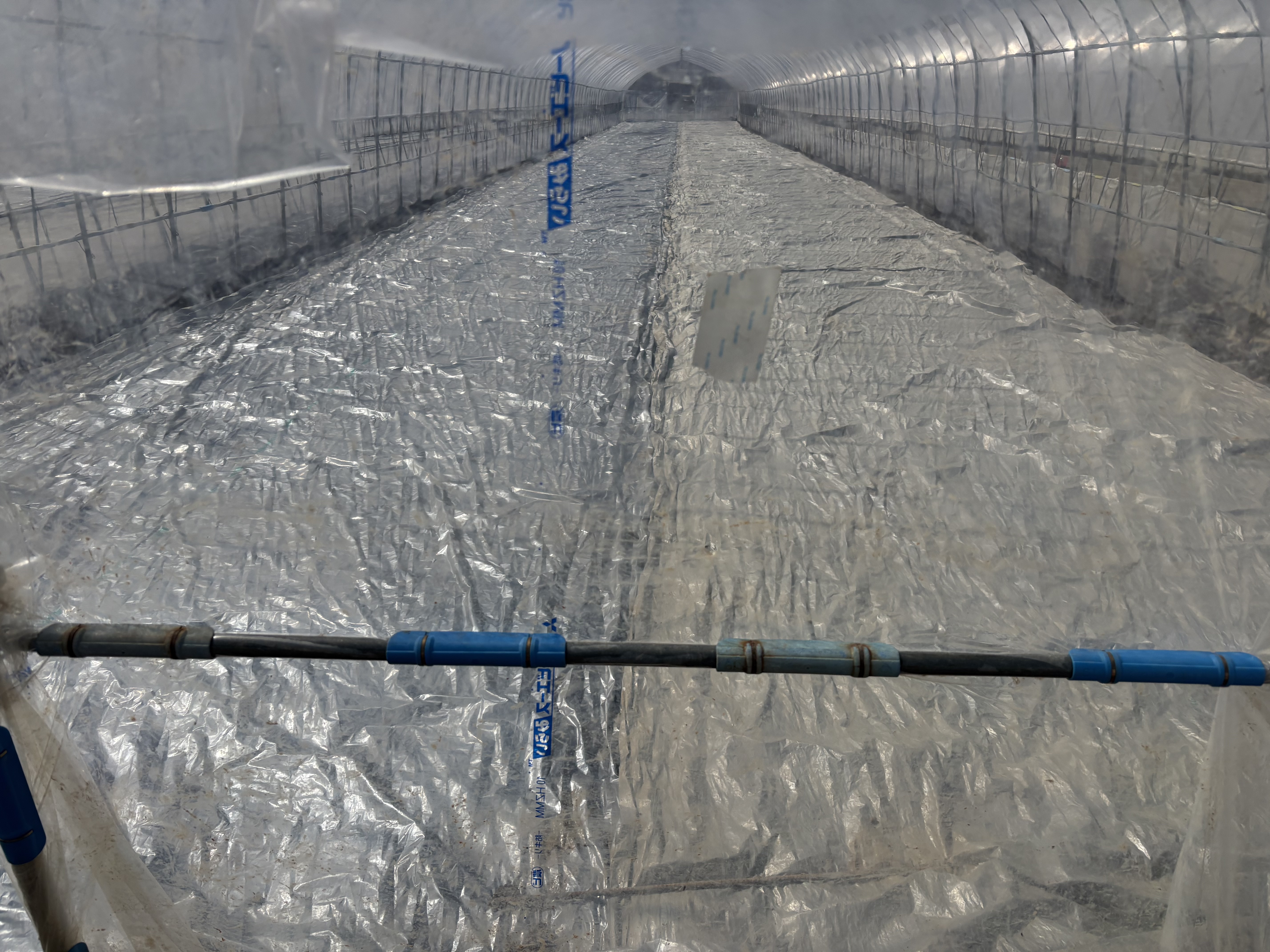
Finally, everything is watered once more before getting covered by a reflective sheet. From here, the labor needs becomes much less: just waiting for seedlings, transplanting to the ground via machine, and cultivating until harvest season in the fall.